
Governor Albert Quie
Master Teacher
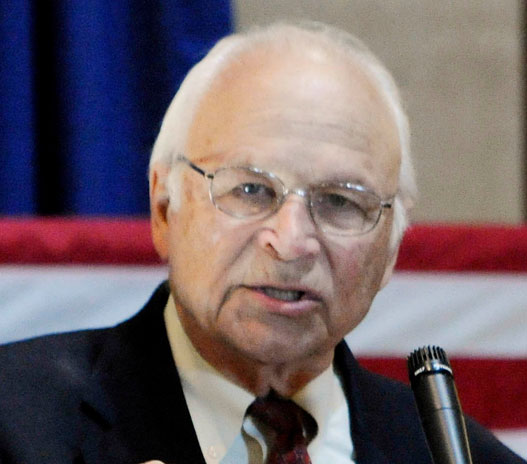
Al Quie’s legacy is often told in speeches and newspapers, but the truest measure of someone’s character is in how they touched the lives around them. His every word carried that quiet weight.
Albert Harold “Al” Quie was a prominent American politician and farmer who served as the 35th Governor of Minnesota from 1979 to 1983. A member of the Republican Party, he was known for his moderate views and deep commitment to public service. Before becoming governor, Quie represented Minnesota’s 1st congressional district in the U.S. House of Representatives for over 20 years, from 1958 to 1979. He was highly respected for his work on education and agriculture, and he supported key civil rights legislation during his time in Congress.
Born in 1923 on a dairy farm in Wheeling Township, Minnesota, Quie served as a Navy pilot in World War II and later graduated from St. Olaf College. After his political career, he remained active in public life, especially through prison ministry work. He passed away in 2023 at the age of 99. He was remembered as a man of faith, humility, and bipartisan spirit—someone who led with dignity even during tough economic times.
One of the most surprising and dramatic moments in Al Quie’s political career came during the 1978 election, a political upheaval so unexpected it earned the nickname “The Minnesota Massacre.”
At the time, Minnesota was considered a Democratic stronghold. Quie, a Republican, had just stepped away from a long congressional career and decided to run for governor—against the odds. But in a stunning twist, not only did Quie defeat the incumbent governor but two other Republicans also won U.S. Senate seats that night. The entire political landscape of Minnesota shifted in a single election. It was a rare political moment when the underdog not only triumphed—but helped flip the script on an entire state.
When Al Quie took office in 1979, he walked straight into one of Minnesota’s worst economic downturns since the Great Depression. The state’s budget, once in surplus, quickly spiraled into a deficit of up to $700 million. It was a brutal time—unemployment was high, inflation was biting, and the state’s revenues were shrinking fast.
His approach was guided by a belief that government should be both responsible and compassionate. He refused to gut programs that supported vulnerable Minnesotans, even when political pressure mounted. By the time he left office in 1983, the state had stabilized and was running a budget surplus again.
It cost him politically—he chose not to seek re-election—but many later praised his integrity and willingness to put the state’s needs above his own popularity.
My friend, Al Quie embodied the true qualities of a public servant which are:
- He was a steward, not celebrity: he held power with care, not for attention or legacy.
- He was a listener before leader: he was willing to hear the hard truths from the people not just repeat what polls or party lines dictated.
- He was extremely courageous in quiet ways: He resisted pressure, admitted mistakes, and put the common good above career and survival.
- He was immensely transparent without being defensive: He was open about motives, because he believed trust is built in the light, not the shadows.
Al Quie constantly remembered what others in his role forgot: That they’re not rulers but mere caretakers of a public promise thus showing us the true characters of a public servant.